๐Ÿšจ Emergency or out of hours? 0131 516 2499 | Calls auto-forward to ICR Loanhead out of hours | โš ๏ธ Pet eaten something? Poison guide

Home โ€บ Our services โ€บ Western veterinary acupuncture

Evidence-based pain & neurological support

Western veterinary acupuncture โ€”
pain relief and more.

Western veterinary acupuncture is an evidence-based clinical discipline grounded in neurophysiology โ€” not traditional Chinese medicine. It works through stimulation of peripheral sensory nerves, producing measurable effects on pain pathways, muscle function and neurological response.

๐Ÿ”ฌ
Grounded in neurophysiology โ€” not traditional Chinese medicine
Western veterinary acupuncture uses our understanding of how the nervous system processes pain and movement. The mechanism is neurological, not energetic.
โš•๏ธ
Complements conventional veterinary medicine
Acupuncture at TWC is used as part of a multimodal treatment plan. It adds to what conventional medicine can achieve.
๐Ÿ’Š
Reducing pharmaceutical load where appropriate
For some patients, effective acupuncture means needing less pain medication โ€” or the same medication working better. A useful tool to tailor treatment to individual needs.

What it is

Western veterinary acupuncture โ€” the mechanism explained

When fine needles are placed at specific anatomical points, they stimulate peripheral sensory nerves. This triggers a cascade of responses โ€” locally in the tissue, at the spinal cord level, and in the brain โ€” that include:

  • Release of endorphins and enkephalins โ€” the body's natural pain-killers
  • Modulation of pain signals at the spinal cord (gate control)
  • Muscle relaxation โ€” reducing spasm and trigger point pain
  • Improved local circulation and tissue oxygenation
  • Central effects that reduce the amplification of chronic pain signals
  • Immune modulation โ€” influencing local and systemic immune responses

This is why western veterinary acupuncture is particularly effective for chronic pain conditions, musculoskeletal problems and certain neurological presentations โ€” the very conditions where conventional pharmaceutical management alone often reaches its limits.
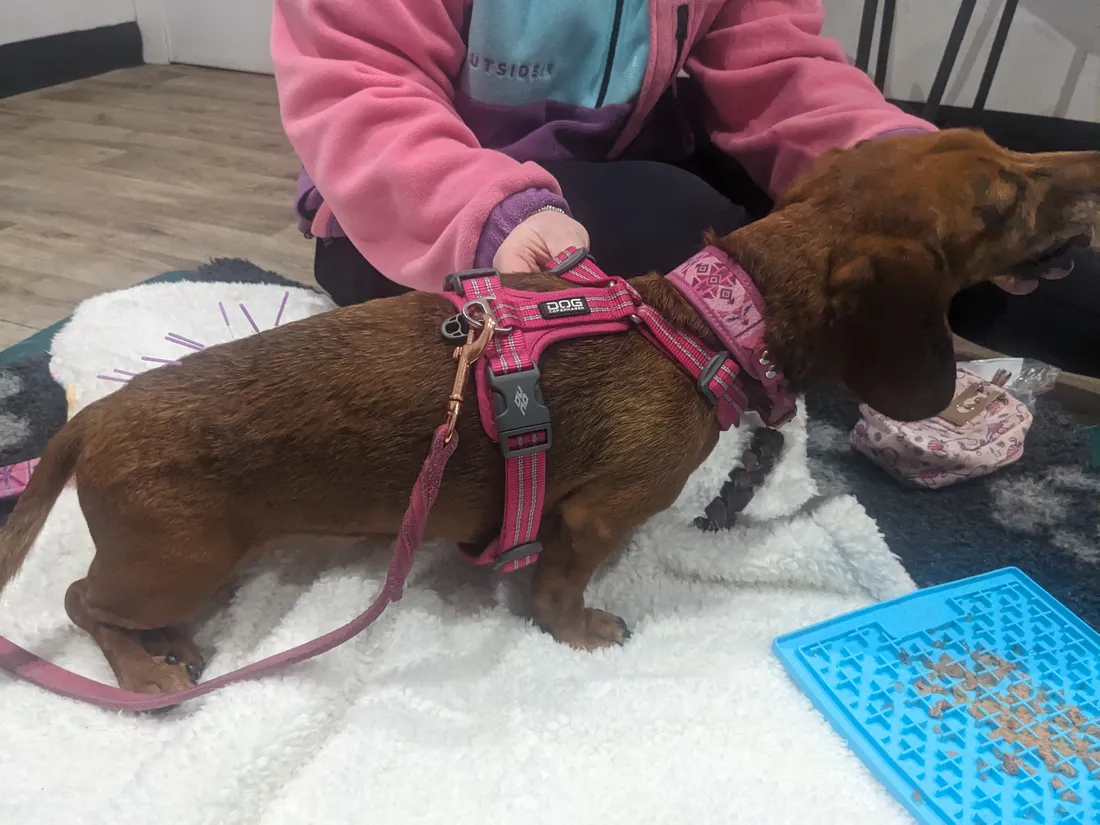
A dachshund in a harness receiving acupuncture, calmly enjoying a lickmat during treatment

Conditions we treat

When western veterinary acupuncture is most effective

๐Ÿฆด
Musculoskeletal pain
Osteoarthritis, spondylosis, hip and elbow dysplasia, muscle tension and myofascial pain โ€” acupuncture is particularly effective for the muscle component of chronic orthopaedic conditions, reducing pain and spasm as part of a multimodal approach.
โšก
Neurological conditions
IVDD, degenerative myelopathy, nerve root pain โ€” acupuncture can modulate neuropathic pain and support neurological recovery alongside conventional treatment.
๐Ÿ’Š
Chronic pain management
For patients where pharmaceutical management alone is insufficient or where side effects are a concern โ€” acupuncture as part of a multimodal pain plan.
๐Ÿ”„
Post-surgical recovery
Accelerating recovery after orthopaedic surgery by reducing pain and muscle tension โ€” enabling earlier mobilisation and physiotherapy.
๐Ÿฑ
Feline pain conditions
Cats respond well to acupuncture โ€” particularly for chronic pain conditions where pharmaceutical options are more limited than in dogs.
๐Ÿ”ฌ
Immune-mediated conditions
Acupuncture has a role in complex immune-modulated conditions including IBD, immune-mediated polyarthritis (IMPA), atopic dermatitis, cancer and sepsis โ€” supporting immune modulation alongside conventional management.

What to expect

A western veterinary acupuncture session at TWC

1
Full clinical assessment
Every acupuncture patient is assessed clinically first. We identify the pain generators, the neurological status and the most appropriate needle points. Acupuncture is prescribed individually โ€” there is no standard protocol.
2
Needle placement
Fine, sterile needles are placed at appropriate anatomical points. Most animals tolerate this well โ€” many become notably relaxed during the session. The needles are left in place for 15โ€“20 minutes typically.
3
Monitoring & response
We watch your pet throughout and remove needles if they show any discomfort. We ask you to observe your pet carefully at home over the following 24โ€“48 hours and report back on any changes.
4
Course of treatment
Most patients receive an initial course of sessions โ€” typically weekly for 4โ€“6 weeks โ€” before moving to a maintenance schedule. We assess response after each session and adjust accordingly.
๐Ÿพ
Is it painful?
Fine acupuncture needles cause minimal sensation in most animals. Many become very relaxed during treatment โ€” some fall asleep. We stop immediately if any animal shows signs of distress.
๐Ÿ’Š
Can it be combined with medication?
Yes โ€” western veterinary acupuncture is designed to work alongside conventional pharmaceutical treatment, not instead of it. In some patients, effective acupuncture allows medication doses to be safely reduced over time.
๐Ÿฑ
Does it work for cats?
Yes. Cats often respond very well โ€” particularly for chronic pain conditions. We use an appropriately adapted approach for feline patients, with shorter sessions and careful patient assessment.
Acupuncture โ€” add-on to consultation
ยฃ35
ยฃ28 for Pet Wellness Plan members
Integrated care consultation
ยฃ210
Full multimodal review including acupuncture plan
โ˜… โ˜… โ˜… โ˜… โ˜…
Miriam has a wonderfully holistic and flexible approach. My cat is notoriously contrary and quite hyped about everything outside of home, but is always quite confident in Miriam's room for acupuncture (I am a vet, but there's nowhere else I would go for complementary care!)

Sophie P. MRCVS ยท Facebook ยท Recommended

Book a western veterinary
acupuncture consultation

Call us to discuss whether acupuncture is appropriate for your pet. We are happy to have an informal conversation before booking an appointment.